
Blog
Analytical balances have moved from visible mechanical equilibrium to electronic sensing and digital processing. That shift made weighing faster, easier to document, and more compatible with connected laboratory work. It did not remove the fundamentals: a stable surface, controlled drafts and temperature, suitable calibration, clean handling, and a documented acceptance check still determine whether a result is useful. For a buyer, the right question is therefore not whether digital sounds newer. It is whether the balance can deliver verified performance across the samples, environment, and records your laboratory actually requires.
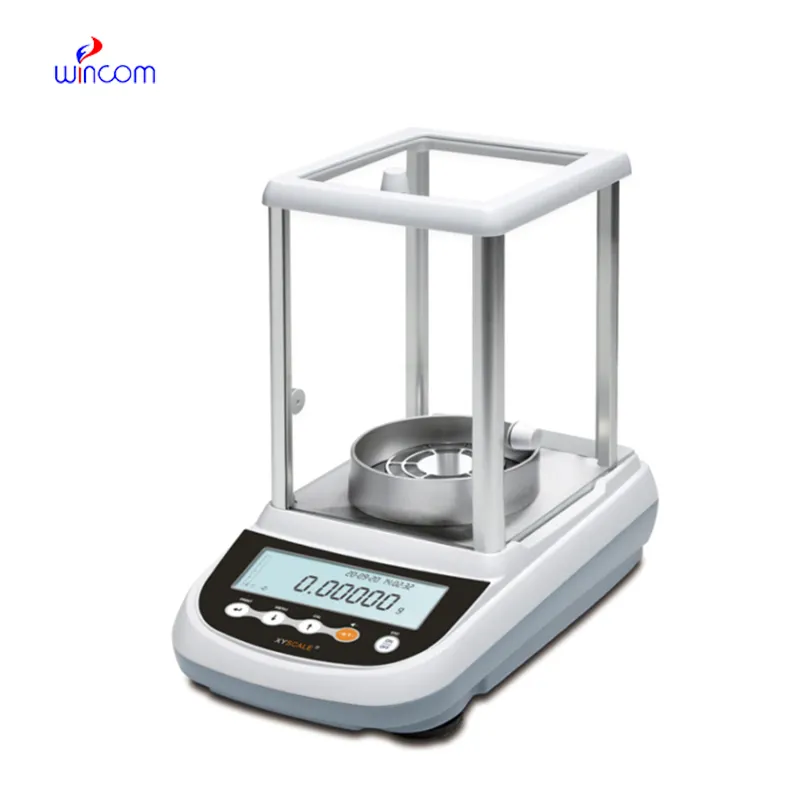
A mechanical analytical balance compares an unknown load with a known mass through a beam, knife edges, and an optical or pointer readout. The operator observes equilibrium and adjusts weights or riders until the indication settles. This architecture is transparent and can remain serviceable for years, but it asks more of the operator and takes longer for repeated measurements.
The next stage combined a mechanical weighing structure with electronic indication. These hybrid instruments reduced reading effort while retaining much of the older mechanism. Modern digital balances use a load cell or electromagnetic force-restoration system to convert the effect of a load into an electrical signal. A processor filters that signal, applies calibration data, detects stability, and presents a numerical result. The result is a shorter path from sample to record, but also a larger role for electronics, software settings, and service support.
Mechanical designs remain relevant where a laboratory values visual understanding, low electronic complexity, or continuity with an established method. They can be practical for teaching, basic formulation work, and low-throughput tasks when the required tolerance is modest. Their behavior is easy to explain during training, and a power interruption does not necessarily stop weighing.
Their limits are equally clear. Readings depend on careful leveling, rider or weight selection, and the operator's judgment of equilibrium. Recording is manual, so transcription and rounding errors need controls. Settling can be slow, and vibration, air movement, or a worn knife edge can affect the indication. A mechanical balance can be excellent within its design envelope, yet its workflow is less efficient when many samples, calculations, or audit trails are involved.
Digital technology compresses several repetitive steps into the instrument workflow. Tare, unit selection, stability indication, and percentage or piece-count functions may be available depending on the model. A clear display reduces interpretation time, while an interface can send results to a printer, computer, or laboratory information system. These features are valuable only when the laboratory defines how they are configured, verified, and used.
Electronic sensing also enables software-assisted calibration and diagnostics. That can improve consistency between operators, but it is not a substitute for qualified reference weights or a written calibration program. Digital balances can be more sensitive to temperature drift, static electricity, electromagnetic interference, and unstable benches than users expect. The instrument needs an environment that matches its resolution, plus a routine that confirms performance rather than trusting a stable-looking number.
Recommended Digital Analytical Balance
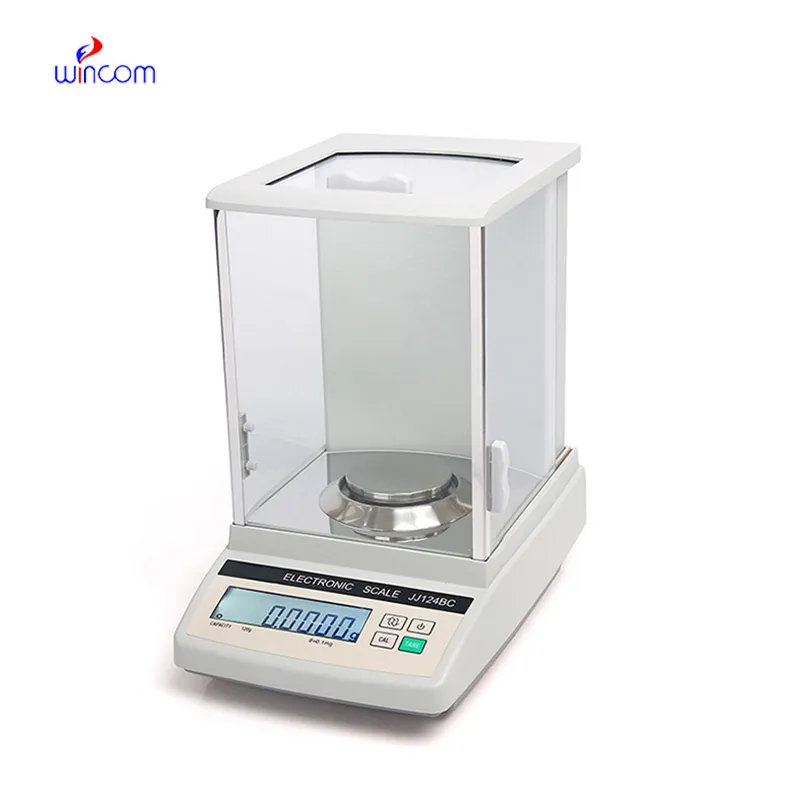
Wincom EB-JJ223
Wincom's EB-JJ223 is an electronic analytical balance in the JJBC series for laboratories that need a digital weighing workflow. The product identity and series are clear from the supplied Wincom product link, while capacity, readability, repeatability, calibration mode, interfaces, draft-shield configuration, and compliance documents should be confirmed against the current datasheet before ordering. The practical decision is whether the model's documented performance and service package match the tolerance, environmental control, and verification records required by the application.
Start with the sample, not the catalog. Record the lightest and heaviest routine loads, the tolerance for each result, vessel dimensions, and whether powders, liquids, or static-prone materials are involved. This defines the useful weighing range and the level of readability that matters.
Next, map the room and workflow. Identify temperature swings, drafts, vibration, humidity, static sources, cleaning chemicals, and the people who will use the instrument. Decide where the balance will sit and what accessories or shielding are needed. Then send a focused inquiry to the supplier with those conditions rather than asking only for a price.
Before release for routine work, perform an acceptance test using the laboratory's reference weights and representative vessels. Check leveling, warm-up, repeatability, eccentric loading, tare behavior, stability time, and communication output where applicable. Record the raw observations, software version, environmental conditions, and pass/fail decision. If the results do not meet the method requirement, resolve the cause before changing the method or blaming the sample.
Finally, write the operating and maintenance routine. Define daily checks, cleaning boundaries, calibration frequency, out-of-tolerance action, user permissions, and record retention. A short refresher after installation prevents the common failure mode in which a capable digital balance is treated like a simple countertop scale.
The move from mechanical to digital analytical balances is best understood as a change in control points. Mechanical instruments concentrate control in the operator and visible mechanism. Digital instruments distribute control across the sensor, electronics, environment, software, and data path. Buyers who evaluate the whole chain can gain speed without giving up confidence.
For a model such as the Wincom EB-JJ223, use the current product documentation and a structured inquiry to close the specification gaps, then link installation qualification and routine verification to your own method. Wincom's Analytical Balance category provides a starting point for comparing laboratory weighing options, while its guide on calibration and maintenance of analytical balances can support the service discussion. For a quotation or application review, send the sample range and required records through Wincom's contact page.
No. Digital instruments usually simplify reading and recording, but accuracy and repeatability depend on the sensor, calibration, environment, and method. Compare verified performance at your operating range rather than assuming that a newer display guarantees better results.
Confirm capacity, readability, repeatability, eccentricity, stabilization time, calibration method, operating temperature and humidity, pan or chamber dimensions, interfaces, power requirements, and available certificates. Ask Wincom for the current datasheet and acceptance criteria before purchase.
Usually not. Review the risk assessment, weighing steps, calibration and cleaning instructions, data records, training, and acceptance limits. Keep the method requirement constant while documenting any workflow change introduced by the new instrument.
State the sample mass range, target tolerance, vessel size, room conditions, expected throughput, calibration weights, data destination, service location, and required compliance documents. This gives the supplier enough context to recommend a usable configuration and test plan.
Need help choosing an analytical balance?
Tell us your requirements. Wincom will recommend a digital analytical balance and the matching weights, draft shield and calibration plan for your workflow.
Or review the Wincom EB-JJ223 and browse all analytical balances.
E-mail: [email protected]
Tel: +86-731-84176622
+86-731-84136655
Address: Rm.1507,Xinsancheng Plaza. No.58, Renmin Road(E),Changsha,Hunan,China


 EN
EN
 af
af
 es
es
 ar
ar
 tr
tr
 sw
sw
 pt
pt
 th
th
 ur
ur
 bn
bn
 ne
ne
 vi
vi
 km
km
 lo
lo
 de
de
 ru
ru
 fi
fi
 nl
nl
 fa
fa
 fr
fr
 ko
ko