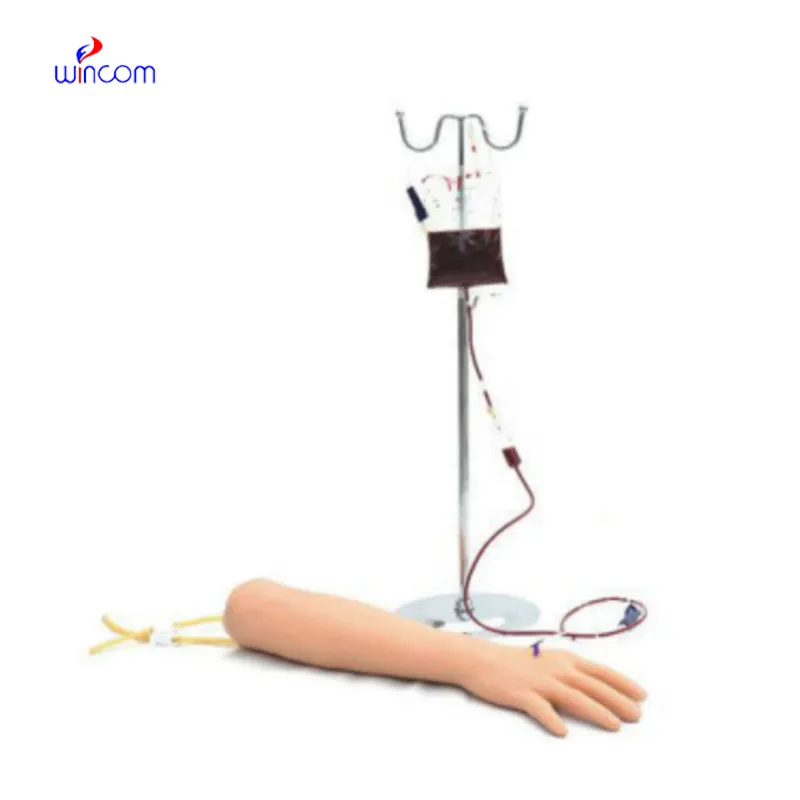
In the hospitals, serum blood collection tubes give a sure way of collecting blood with the least danger of hemolysis or contamination. Tubes are for specific laboratory tests with anticoagulants or clotting factors as additives. Their compatibility with automated laboratory systems boosts efficiency and lessens errors due to manual handling. Color coding and labeling help to easily identify and trace samples. By maintaining the quality of the samples, serum blood collection tubes enable precise lab testing, thus allowing doctors to make decisions depending on trustworthy diagnostic data. These tubes are needed for both daily patient supervision and specific clinical testing.

serum blood collection tubes find their application in pediatric departments for accommodating small-volume blood collections which are the major consideration for making children and infants. The volume is pre-calibrated during the design of the tubes which guarantees the delivery of the right sample volume and thus there is little or no risk of over- or under-collection. The intended use of the tubes includes hematology and biochemistry tests as the additives inside them keep the samples intact by preventing clotting or degradation. Lab staff cannot do without serum blood collection tubes in their work as they are meant for automated processing and centrifugation. Once these tubes are used in pediatric care, hospitals are able to obtain very accurate diagnostic results and keep patients comfortable at the same time, reduce handling errors, and ensure safe and reliable blood collection for this sensitive patient population.

The future of serum blood collection tubes will probably be characterized by the use of high-tech materials that not only improve sample preservation but also have less negative effect on the environment. It is possible that hospitals will switch to using tubes that can be broken down naturally or recycled but still have all the attributes of being sterile and chemically stable. The combination with digital tracking systems might make it possible to monitor the sample's collection, transport, and processing in real-time. These new technologies will support laboratories in their efforts to keep high throughput, provide traceability, and lower pre-analytical errors. Clinical testing requirements are getting more complicated, thus, serum blood collection tubes will change in such a way as to satisfy the dual purpose of sustainability and having the precision, non-variability, and reproducibility of results in both hospital and research settings.

The proper handling of serum blood collection tubes starts by storing them under the right conditions before usage. To maintain the stability of the additives, the tubes should be stored in a clean and dry place, away from direct sunlight and high or low temperatures. Hospitals and laboratories are required to strictly adhere to the manufacturer's recommendations concerning shelf life and storage orientation. A constant check on the integrity of the packaging is a good practice that minimizes the contamination risk. Staff should see to it that they only touch tube openings and caps when absolutely necessary during the daily use. Proper organizing of storage and stock rotation according to expiry dates will guarantee that the quality of the blood collected in clinical and laboratory settings will be no different from that of the previous one.
In outpatient clinics, serum blood collection tubes are used to take blood samples for laboratory tests that are performed routinely, including cholesterol levels, glucose monitoring, and hormone panels, among others. The tubes' pre-measured additives help to get uniform results and at the same time, lessen the handling errors. Clinic employees are relying on the performance of these tubes as being dependable for both short-term and long-term patient monitoring. The correct application of serum blood collection tubes keeps each sample intact while being transported to hospital laboratories. Their ease of use, uniformity, and compatibility with laboratory analyzers come together to make them an essential tool in everyday clinical practice and patient diagnostics.
Q: What is the purpose of Blood Collection Tubes in emergency departments? A: The main function is to facilitate quick and secure blood collection for urgent diagnostic tests. Q: Are Blood Collection Tubes suitable for infants and children? A: Absolutely, there are specialized smaller-volume tubes for both pediatric and neonate applications. Q: What is the procedure when a Blood Collection Tube gets broken? A: The broken tubes cannot be used and should be disposed of per the hospital's rules. Q: Will Blood Collection Tubes leak if there is an accident? A: Leakage during handling and transport is minimized through the secure caps that are designed for these tubes. Q: What methods do hospitals use for tracking Blood Collection Tubes? A: A number of hospitals are using either labeling or barcode systems for sample identification and traceability.
We’ve been using this mri machine for several months, and the image clarity is excellent. It’s reliable and easy for our team to operate.
The hospital bed is well-designed and very practical. Patients find it comfortable, and nurses appreciate how simple it is to operate.
To protect the privacy of our buyers, only public service email domains like Gmail, Yahoo, and MSN will be displayed. Additionally, only a limited portion of the inquiry content will be shown.
Could you share the specifications and price for your hospital bed models? We’re looking for adjus...
I’d like to inquire about your x-ray machine models. Could you provide the technical datasheet, wa...
E-mail: [email protected]
Tel: +86-731-84176622
+86-731-84136655
Address: Rm.1507,Xinsancheng Plaza. No.58, Renmin Road(E),Changsha,Hunan,China


 EN
EN
 af
af
 es
es
 ar
ar
 tr
tr
 sw
sw
 pt
pt
 th
th
 ur
ur
 bn
bn
 ne
ne
 vi
vi
 km
km
 lo
lo
 de
de
 ru
ru
 fi
fi
 nl
nl
 fa
fa
 fr
fr
 ko
ko