
Blog
Suction machines don’t really get noticed until a procedure turns urgent. In an operating room, emergency department, ambulance, clinic, or even a field response kit, they help remove blood, secretions, vomitus, mucus, and other fluids that can block the line of sight, foul the immediate work area, or make airway access harder. For surgeons, anesthetists, nurses, paramedics, and biomedical buyers, the question isn’t just whether suction is “there”. The real point is if the suction apparatus is strong enough, dependable enough, thoroughly cleanable enough, and available at the moment when seconds count.
This guide lays out the lifesaving role of suction machines in surgery and emergency care, then translates that medical weight into practical sourcing criteria for hospitals, distributors, clinics, and medical equipment procurement teams.
A suction machine makes controlled negative pressure so liquid or gas can be pulled along tubing into a collection reservoir. In a high-pressure surgical or emergency setting, this kind of managed suction helps with a few practical aims, like keeping the airway manageable, keeping the treatment area clear to see, and reducing the lag time when a patient condition changes in a sudden way.
During surgery, pooled blood and irrigation fluid can blur the anatomy and slow decisions. In emergency care, vomit, mucus, or blood in the mouth and upper airway can make evaluation and ventilation more difficult. Suction does not take the place of clinical judgment, airway training, infection control, or emergency protocols, yet it gives trained staff a straightforward mechanical helper for clearing fluid, so care can keep moving.
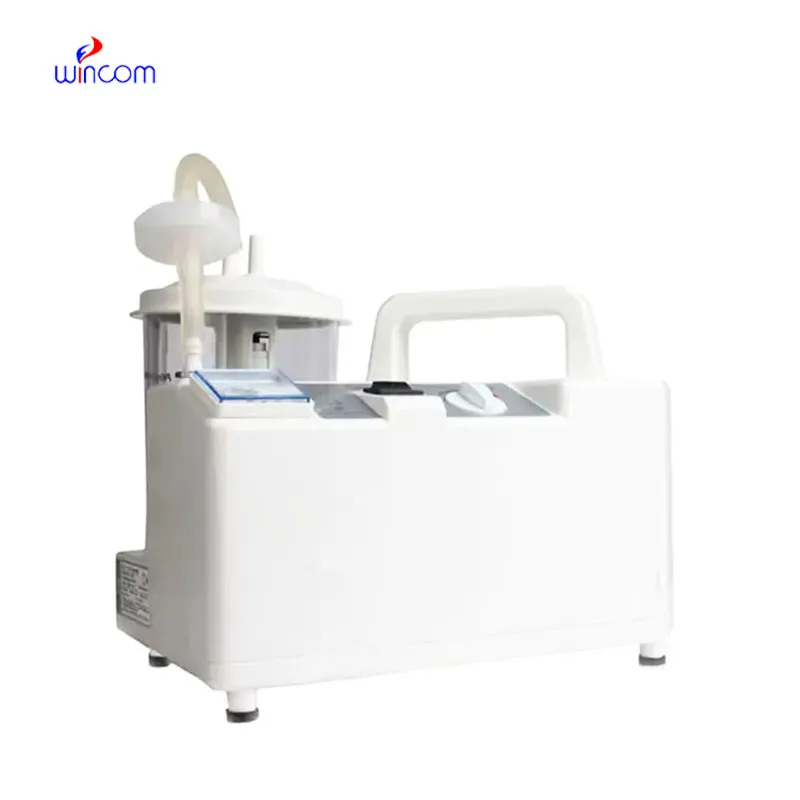
In the operating room, suction helps teams keep a more clearer surgical field, manage the irrigation fluid, and respond with speed when bleeding shows up. In anesthesia and recovery areas, suction may still support airway management under trained supervision. Meanwhile, in emergency departments, ambulances and first-aid rooms, portable suction or a backup-ready setup can help clinicians act on aspiration risk, trauma-related issues, airway obstruction caused by secretions, and even sudden deterioration.
For procurement teams, these use cases matter because one machine may not serve every environment equally well. A wall suction system can suit a fixed operating room, while a mobile suction apparatus or AC/DC model may be more useful where electricity is uncertain, patient movement is common, or equipment has to be shared between treatment areas.
A good purchasing discussion should translate clinical risk into measurable requirements. Maximum negative pressure affects suction force. Pumping rate influences how quickly fluid can be evacuated. Reservoir capacity affects how often staff may need to interrupt work to manage collected fluid. Noise level can matter in clinics, recovery rooms, and emergency spaces where communication remains important.
Buyers should also review power options, tubing compatibility, overflow protection, filter arrangements, cleaning workflow, spare bottle availability, local plug requirements, and after-sales support. These details influence uptime, training burden, infection-control discipline, and the cost of keeping equipment ready across departments.
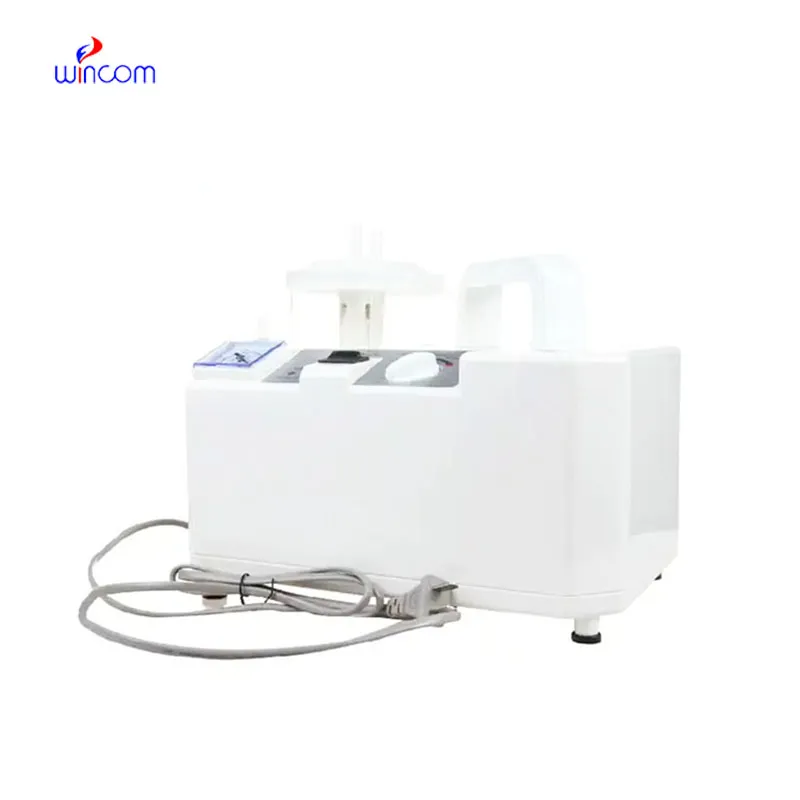
Surgical suction is often judged by how smoothly it slips into the actual procedure. The staff needs predictable suction response, stable tubing connections, reachable controls, and a reservoir system that can be watched in a way that doesn’t steal attention from the case. If the pump seems underpowered, clogs happen more than expected, or it keeps forcing pauses for fluid handling, then the real expense is workflow disruption rather than the purchase price all by itself.
Hospitals and distributors that are comparing suction machines for surgical work should really ask how the model handles continuous use, whether it’s simple to carry and set up from room to room, and how replacement consumables are obtained. For mixed departments, an adaptable unit can cover minor surgery, outpatient treatment, ENT tasks, emergency rooms, and even backup use, as long as the clinical team confirms it matches the protocol.
Emergency suction has a different buying logic. The device may sit idle for long periods, then be needed immediately. That makes readiness, DC compatibility, fast setup, and simple cleaning especially important. Equipment should be easy for trained staff to identify, connect, operate, and restore after use.
AC/DC suction machines are useful where equipment may move between fixed rooms, vehicles, temporary treatment points, or areas with unstable mains power. For emergency planners and importers, power flexibility can reduce the risk of a machine becoming unavailable at the moment it is needed most.
| Requirement | Why it matters |
|---|---|
| Negative pressure range | Supports effective fluid removal when matched to the clinical task. |
| Pumping rate | Influences evacuation speed during active procedures or urgent airway support. |
| Reservoir volume | Affects interruption frequency, cleaning workload, and department fit. |
| AC/DC power | Improves readiness in mobile, backup, ambulance, or power-variable environments. |
| Noise level | Helps staff communicate in procedure rooms and emergency settings. |
| Cleaning and consumables | Controls usability, infection-control workflow, and spare-part planning. |
| Supplier documentation | Supports quotation review, training, import clearance, and maintenance planning. |
⭐ Recommended Universal Suction Apparatus | Wincom SM-7D
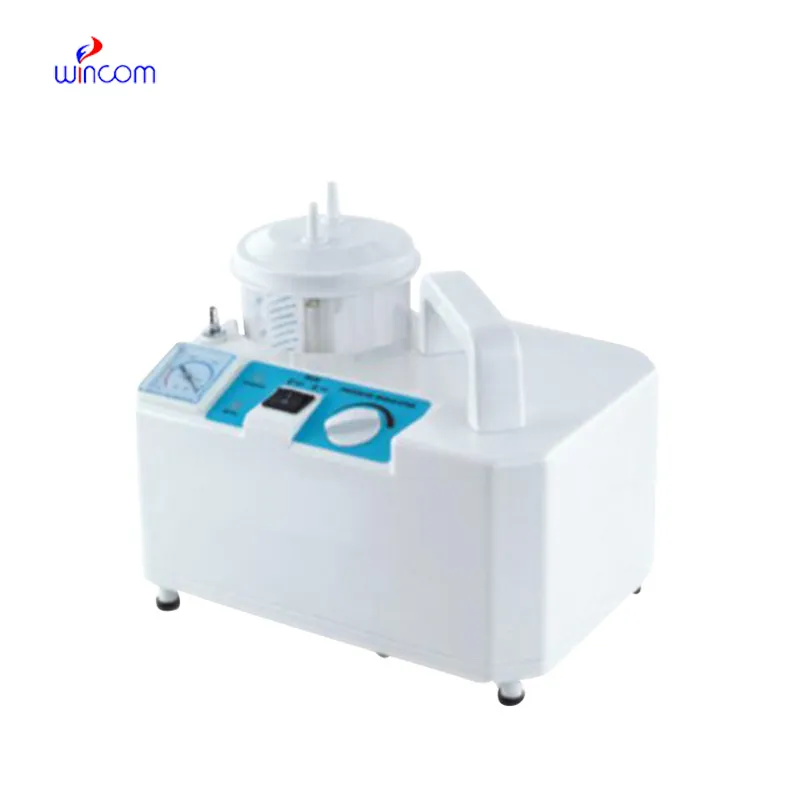
Wincom’s Universal Suction Apparatus AC/DC SM-7D is a practical option for buyers who need suction support across surgery-adjacent, emergency, clinic, and mobile-care environments. It works with AC220V/110V and DC12V power, uses about 90VA, offers a maximum negative pressure value of at least 0.075MPa, provides a pumping rate of at least 15L/min, and has a 1000ml reservoir. With a noise level of no more than 65dB(A), it gives procurement teams a balanced checklist for backup readiness, fluid collection capacity, and manageable working noise when evaluating suction machine supply for hospitals, clinics, distributors, or emergency equipment packages.
Request a Suction Machine Quote: Universal Suction Apparatus AC/DC SM-7D
For a Wincom inquiry, describe the intended department, power environment, plug or voltage configuration, reservoir preference, and spare-part expectations. That keeps the quotation tied to real use instead of a generic medical equipment list.
Distributors and importers should go further than just the model name and price. They also need to confirm packaging, documentation, labeling language, warranty terms, spare reservoirs, tubing, filters, and replacement parts. Also, if the suction machine is going to be sold into regulated medical markets, buyers really should check local registration, certification, and compliance requirements before import or before it is used in a clinical setting.
A lot of medical equipment buyers purchase suction machines alongside oxygen concentrators, nebulizers, patient monitors, emergency trolleys, hospital beds, or disposables. Partnering with a broader medical equipment exporter, like Wincom, can make communication a bit easier when the order covers several categories. Each item still deserves its own specification review.
A suction apparatus is only as dependable as the routine built around it. Staff need training on setup, tubing connection, reservoir handling, cleaning intervals, and weak-suction response. Biomedical teams should define inspection routines for the pump, seals, tubing, bottle, filters, and power connection.
Cleaning procedures should follow the facility’s infection-control policy and the manufacturer’s instructions. The reservoir is part of a contamination-control system, not just a container. Clear cleaning responsibility and spare consumable planning reduce the chance that equipment is present but unusable.
Buyers comparing suction equipment can review Wincom’s medical equipment categories, check available download resources, learn more about Wincom as a medical and laboratory equipment exporter, or send a detailed requirement through the contact channel.
It helps trained staff remove fluids such as secretions, blood, or vomitus from the treatment area or airway pathway so emergency care can continue under local clinical protocols.
Yes. AC/DC capability can be valuable for backup use, mobile treatment areas, clinics, emergency rooms, and settings where power supply conditions vary.
Focus on negative pressure, pumping rate, reservoir capacity, power options, noise, cleaning workflow, spare parts, and supplier documentation.
Sometimes, especially for backup or flexible use, but suitability depends on protocol, required suction performance, reservoir capacity, mobility, and cleaning process.
Suction machines support lifesaving work because they help clinical teams keep fluids from blocking visibility, slowing procedures, or complicating airway management. For buyers, the best choice is the suction apparatus that fits the care environment, starts reliably, provides suitable performance, can be cleaned properly, and is supported by clear supplier communication. In surgery and emergency care, readiness is the real value.
Note: Clinical use, cleaning, and regulatory acceptance should be verified against local protocols, training requirements, and applicable market rules before deployment.
E-mail: [email protected]
Tel: +86-731-84176622
+86-731-84136655
Address: Rm.1507,Xinsancheng Plaza. No.58, Renmin Road(E),Changsha,Hunan,China


 EN
EN
 af
af
 es
es
 ar
ar
 tr
tr
 sw
sw
 pt
pt
 th
th
 ur
ur
 bn
bn
 ne
ne
 vi
vi
 km
km
 lo
lo
 de
de
 ru
ru
 fi
fi
 nl
nl
 fa
fa
 fr
fr
 ko
ko



