blood sample collection tubes play an essential role in upholding laboratory diagnostics quality. The sterile, pre-labeled tubes guarantee correct sample collection and processing. Hospitals utilize these tubes for various clinical tests, from the simplest blood counts to the most sophisticated biochemical assays. The chemicals contained in the tubes maintain the blood's nature so that there is no error in determining the quantity of cells and plasma. They are purposely engineered for safe use, quick delivery, and automation-friendly. The dependability of blood sample collection tubes is directly responsible for the rapid and accurate laboratory results which, in turn, aid in patient management and the smooth running of hospitals.

In laboratory diagnostics performed through imaging or during preoperative assessments, blood sample collection tubes are used to obtain blood for biochemical, hematologic, or coagulation analysis. Blood tubes remain intact throughout the process of transportation and testing. Laboratory workers depend on premade additives and fixed volumes to provide accurate and consistent results. Different tube types for particular tests can be easily identified through their colored caps. The use of blood sample collection tubes in preoperative and laboratory processes enables hospitals to handle blood samples quickly and efficiently, guaranteeing reliable results for surgical planning and contributing to patient safety through quick and accurate diagnostics.

Future designs of blood sample collection tubes might be with nanomaterial coatings or additives that keep blood components for a longer time under different storage conditions. Hospitals might get the advantage of tubes that keep cells alive, plasma stable, and analyte unchanged over a longer period. It would be possible for central laboratories to process samples from several collection places at the same time without losing quality. Digital monitoring plus automated handling systems will dramatically improve the efficiency of the workflow. These breakthroughs will make blood sample collection tubes very necessary for places dealing with many diagnostics daily, research hospitals, and clinics that need both precision and efficiency.

blood sample collection tubes routine maintenance procedures are primarily concerned with handling and environmental conditions rather than mechanical maintenance. To keep the tubes sterile, laboratories must guarantee that they are not opened until they are required. The tubes should not be exposed to moisture, dust, or chemical vapors. To reduce the risk of cross-contamination, hospital personnel must strictly adhere to the established protocols for disposal after each use. Cleaning and monitoring of storage areas for temperature stability should be done regularly. By providing controlled conditions and consistently applying handling procedures, healthcare institutions will be able to maintain the dependability of blood sample collection tubes all through their projected usage life cycle.
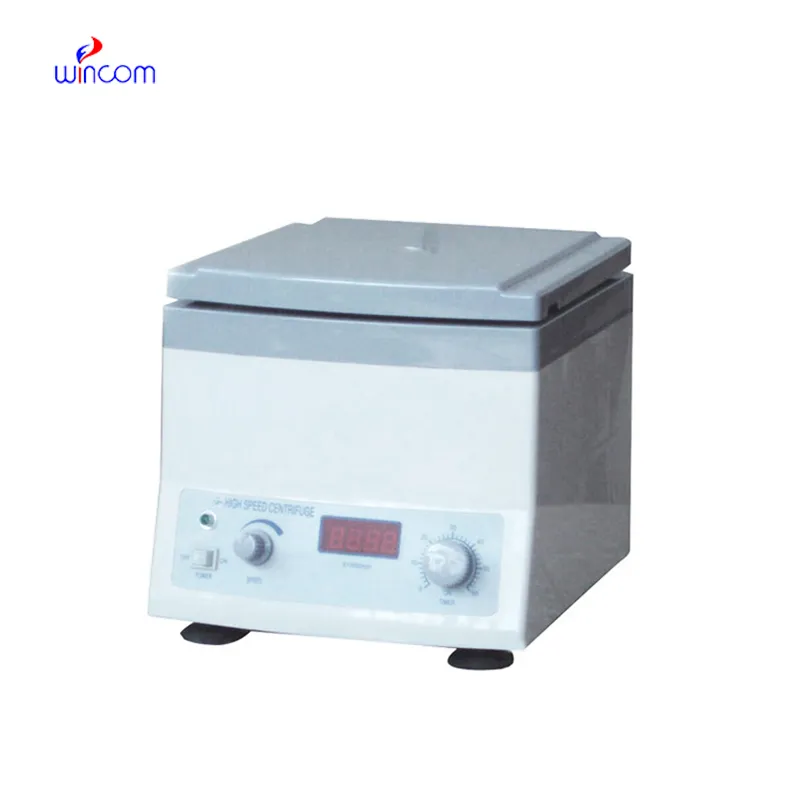
Automated laboratory in hospitals heavily depend on blood sample collection tubes that are suitable for centrifuges, analyzers and barcode scanning systems. The process of automation demands the use of tubes that have uniform volume and stable chemical properties. In hectic clinical labs, these tubes help in processing the samples quickly by cutting down the number of hands that handle the sample and keeping the contamination risks low. Information systems in the laboratory can monitor every blood sample collection tubes for the patient's name and testing history. The commonality in the use of the tubes enables hospitals to provide high-volume testing with accurate results in hematology, biochemistry and immunology domains that, in turn, facilitates the management of the workflow and the attainment of the reliable diagnostic outcomes.
Q: In what way Blood Collection Tubes act as a barrier against infections? A: The use of sterile materials for production and the one-use-only principle combined make possible the reduction of the risk of contamination. Q: Are Blood Collection Tubes only for use in research laboratories? A: Indeed, they find substantial application in clinical research and diagnostics. Q: What kind of materials are Blood Collection Tubes made of? A: Generally, the materials can be either medical-grade plastic or glass. Q: What is the procedure to dispose of Blood Collection Tubes after the usage? A: These tubes should be treated as contaminated medical waste and disposed of in accordance with the hospital's regulations. Q: What is the Importance of Blood Collection Tubes labeling? A: The proper labeling ensures the proper patient identification and accuracy of lab processing.
The water bath performs consistently and maintains a stable temperature even during long experiments. It’s reliable and easy to operate.
We’ve been using this mri machine for several months, and the image clarity is excellent. It’s reliable and easy for our team to operate.
To protect the privacy of our buyers, only public service email domains like Gmail, Yahoo, and MSN will be displayed. Additionally, only a limited portion of the inquiry content will be shown.
Hello, I’m interested in your centrifuge models for laboratory use. Could you please send me more ...
Hello, I’m interested in your water bath for laboratory applications. Can you confirm the temperat...
E-mail: [email protected]
Tel: +86-731-84176622
+86-731-84136655
Address: Rm.1507,Xinsancheng Plaza. No.58, Renmin Road(E),Changsha,Hunan,China


 EN
EN
 af
af
 es
es
 ar
ar
 tr
tr
 sw
sw
 pt
pt
 th
th
 ur
ur
 bn
bn
 ne
ne
 vi
vi
 km
km
 lo
lo
 de
de
 ru
ru
 fi
fi
 nl
nl
 fa
fa
 fr
fr
 ko
ko