
Blog
Pre-analytical variables have a hidden impact on diagnostic accuracy. Tube selection directly affects lab results, patient safety, and regulatory compliance. The global demand for standardized blood collection systems is steadily increasing. Modern healthcare facilities view the transition from simple consumables to critical diagnostic components as essential.
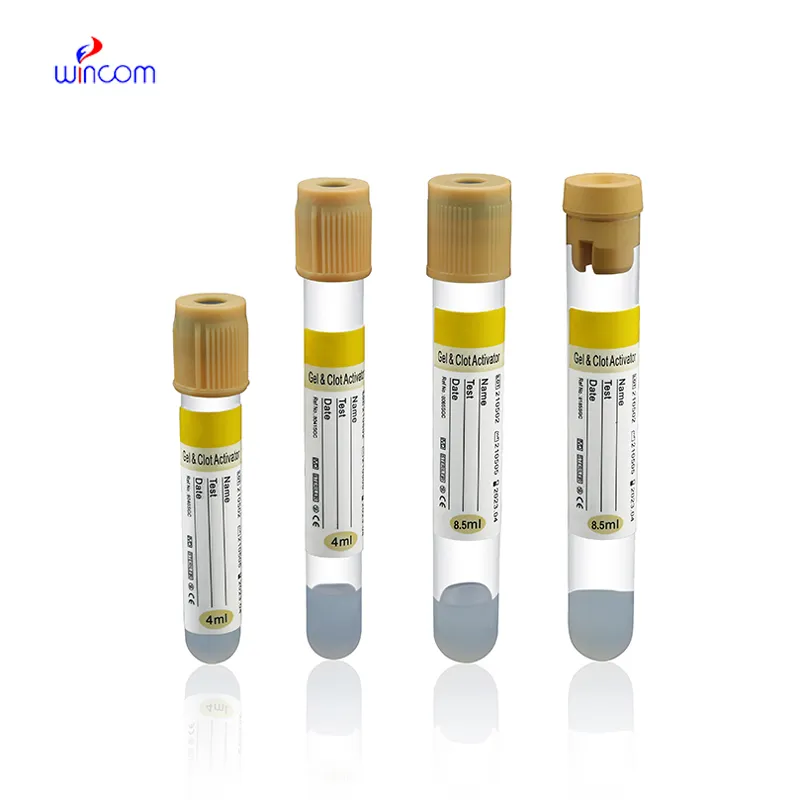
Manufacturers produce tube material from either traditional glass or modern PET plastic. The internal vacuum system dictates draw volume accuracy. Manufacturers also apply specific additives and coatings to the interior walls.
Healthcare providers rely on three main types of tubes. Anticoagulant tubes prevent the blood from clotting. Clot activator tubes intentionally speed up the clotting process. Gel separator tubes create a physical barrier between serum and cells.
International standardization guides these color schemes, though regional variations still occur. This visual system serves the critical purpose of minimizing human error in high-throughput labs.
These tubes contain either no additive or a basic clot activator. Technicians use them for serum testing, which includes biochemistry and serology. Their clinical significance rests on providing baseline testing reliability.
These are Serum Separator Tubes. They contain a clot activator combined with a polymer gel. Laboratories use them for comprehensive chemistry panels and immunology. The primary advantage is improved sample stability and separation. Facilities seeking dependable options can explore our Vacuum Blood Collection Yellow Tubes.
Blue tubes contain liquid sodium citrate. Medical staff use them for coagulation tests, such as PT and aPTT. The critical ratio of blood-to-additive precision determines the success of these tests.
These tubes contain EDTA. Professionals use them strictly for hematology, which covers CBC and blood typing. The clinical significance of EDTA is that it successfully preserves cellular morphology.
Green tubes contain either lithium or sodium heparin. Facilities use them for plasma chemistry and urgent STAT testing. They offer a rapid turnaround time for critical patients.
These tubes hold sodium fluoride and potassium oxalate. Labs use them for accurate glucose testing. Their key value is that they inhibit glycolysis within the sample.
Black tubes also contain sodium citrate, but they use a different ratio than blue tubes. Technicians use them to measure the Erythrocyte Sedimentation Rate (ESR).
The industry utilizes several other specialized tubes. Pink tubes handle blood bank testing. Royal blue tubes facilitate trace element analysis. Tan tubes are designed for lead testing.
Phlebotomists follow a standardized sequence for drawing blood tubes to prevent additive carryover between tubes, as recommended by the Clinical and Laboratory Standards Institute (CLSI). The typical order starts with blood culture tubes or yellow/SPS tubes, followed by light blue (sodium citrate for coagulation tests), red or gold (serum or SST for chemistry), green (heparin for certain chemistries), lavender (EDTA for hematology), and finally gray (sodium fluoride for glucose). This sequence minimizes cross-contamination risks by drawing tubes with clotting activators or no additives before those with anticoagulants.
Drawing tubes out of order can cause additives like EDTA from lavender tubes to contaminate subsequent serum tubes, leading to falsely elevated potassium (pseudohyperkalemia), low calcium, or low magnesium levels. Such errors may result in misdiagnosis, like unnecessary medication changes for apparent hyperkalemia, or delays in critical care. In severe cases, they contribute to life-threatening outcomes, including inappropriate anticoagulation adjustments causing strokes or hemorrhages.
Use this step-by-step checklist to ensure compliance during venipuncture.
The selection of appropriate tubes for testing purposes determines the accuracy of diagnostic results through its ability to decrease pre-analytical factors that change analyte levels. Laboratory testing errors during this stage represent the primary cause of testing mistakes, which result in either wrong patient diagnoses or treatment delays.
Pre-analytical errors comprise 46% to 68.2% of all lab errors, which exceed the analytical error rate of approximately 10%. In one case, a hospital encountered ongoing issues with complete blood count samples due to hemolysis and improper tubes, which created expenses for redraws, delayed results, and potential transfusions, which combined to create a financial burden that hospitals projected would exceed millions annually across their facilities. The existing failures require standardized protocols because they establish a framework that hospitals should follow to decrease sample rejection rates that can reach 5.5% of total processed samples.
Pseudohyperkalemia arises from EDTA interference in lavender top tubes, since just 3.2% carryover elevates K+ by 0.54 mmol/L along with decreased calcium (1%), magnesium (2.4%), and zinc (71%). The citrate dilution effect in under-filled blue-top tubes increases PT and aPTT values, resulting from too much anticoagulant compared to blood sample size; CLSI guidelines call for 90% fill or better, because lesser amounts falsely increase coagulation times. This type of test interference creates inappropriate treatments, such as potassium reduction or anticoagulation changes.
Hemolysis, identified by the pink/red coloration of the serum due to red blood cell lysis, releases intracellular potassium and LDH and makes 25% of all rejected specimens invalid, usually caused by excessive draws, use of tiny needle or "milking" heel sticks for neonates.
The samples should be stored refrigerated for most tubes (2-8 °C), and promptly sent to labs without changing the temperature or subjecting them to pneumatic tube transportation, causing lysis through relative motion between the tube and blood.
Samples should be gently inverted 8-10 times immediately after draw and centrifuged to keep their integrity.
The selection of appropriate blood collection tubes will lead to precise diagnostic results, efficient healthcare operations, and protection of patient healthcare in your medical facility. The evaluation of main criteria together with quality standards and cost-performance relationships enables facilities to make better purchasing decisions that fulfill their particular requirements.
Administrators select tube types based on the main purpose, which includes high-acuity hospitals requiring quick serum separation, standalone laboratories that need hematology tubes, and diagnostic centers that test for coagulation.
Testing sites need tubes which work with automated systems to decrease manual work and testing mistakes, while testing sites that operate at lower capacities can use multi-additive tubes for different purposes.
The selection of storage materials depends on local storage conditions, which include temperature-controlled storage facilities and humid transportation routes, thus operators prefer PET tubes for their ability to maintain stability during transport compared to glass tubes.
Premium tubes maintain a consistent vacuum draw, which enables accurate fill measurement while stopping both underfilling and overfilling that would distort measurement outcomes.
Additive accuracy, such as precise EDTA concentrations in lavender tops, prevents artistic errors that lead to pseudothrombocytopenia, while sterility testing together with extended shelf life up to 18 months provides protection against contamination hazards.
Buyers should request validation data from suppliers, which includes studies that meet CLSI standards and assess hemolysis rates together with analyte stability.
Low-cost tubes often suffer from vacuum inconsistencies or inferior additives, leading to higher repeat testing rates (up to 5% of samples) and increased long-term expenses from errors.
Premium options, like those with advanced gel separators, reduce hemolysis by 50% and support faster turnaround, justifying 20-30% higher upfront costs through reliability.
A smart procurement strategy involves bulk contracts with vetted suppliers, pilot testing new lots, and total cost-of-ownership models factoring in waste reduction and workflow gains.
A dependable supplier delivers consistent quality for international projects. China wincom offer robust customization options for labeling, volume, and additives. Top-tier partners possess established OEM/ODM capabilities. We also leverage extensive logistics and export experience. Finally, we provide excellent after-sales technical support.
A small tube has a big clinical impact. We strongly emphasize the importance of standardization and quality sourcing. We encourage buyers to evaluate suppliers strategically to protect their operations.
We invite your inquiries for comprehensive laboratory solutions. You can contact us for bulk orders. Our team is ready to meet your custom specifications. We actively seek long-term distributor partnerships. We offer free samples so you can test our quality firsthand. We also provide complete technical datasheets. You can schedule a consultation with us for your lab setup today.
Color coding exists to support international standardization and minimize human error in high-throughput labs. Each color signifies a specific chemical additive and intended clinical use.
Laboratories use Yellow/Gold top SSTs for chemistry panels and immunology. These tubes contain a clot activator and gel, which offers the advantage of improved sample stability and separation.
The standard order of draw protocol prevents cross-contamination between tube additives. Incorrect sequencing leads to compromised samples and significant real-world lab errors.
Vacuum precision ensures the tube draws the exact volume of blood required. If the volume is incorrect, the critical ratio of blood to additive fails, which negatively impacts test accuracy.
Choosing tubes based only on price is a common procurement mistake. Buyers must balance cost and performance, because low-cost risks can compromise lab results more than investing in premium reliability.
E-mail: [email protected]
Tel: +86-731-84176622
+86-731-84136655
Address: Rm.1507,Xinsancheng Plaza. No.58, Renmin Road(E),Changsha,Hunan,China


 EN
EN
 af
af
 es
es
 ar
ar
 tr
tr
 sw
sw
 pt
pt
 th
th
 ur
ur
 bn
bn
 ne
ne
 vi
vi
 km
km
 lo
lo
 de
de
 ru
ru
 fi
fi
 nl
nl
 fa
fa
 fr
fr
 ko
ko