When purchasing a biosafety cabinet, you should consider whether the biological protection provided is for the individual operator or for experimental samples; if the protection is for the operator, it should be clear whether it is for pathogenic microorganisms or toxic chemicals or both. If it targets pathogenic microorganisms, the biohazard level of the microorganisms should also be emphasized; if it targets toxic chemicals, the following principles can be used: no volatile or toxic chemical substances will be operated in Class I or Class II Type A biosafety cabinets. Class II B1 biosafety cabinets can only be used for operating a small amount of volatile or toxic chemical substances. If a certain amount of volatile or toxic chemical substances is to be operated, a Class II B2 biosafety cabinet must be used. Different types of biosafety cabinets have different exhaust characteristics.
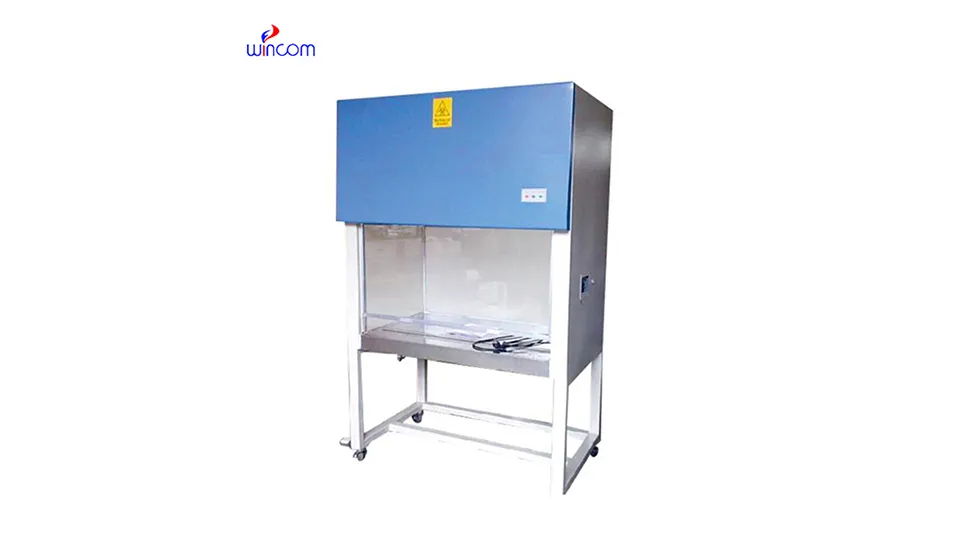
The air rate entering the biosafety cabinet is approximately 0.45 m/s. At this rate, the integrity of the air flow is easily affected by factors such as the movement of nearby people, the opening and closing of windows, the opening and closing of doors, and the operation of air conditioners. To avoid interference from the above factors, biosafety cabinets should be placed away from human activities, the flow of objects, and places that may disrupt airflow. For convenience, a space of 30 cm should be left behind and on the left and right sides of the cabinet to facilitate the maintenance of the cabinet. 30 - 35 cnl space should be left at the upper end to accurately measure the speed of air passing through the exhaust filter and replace the exhaust filter.
When using a biosafety cabinet, the operator's arm should be extended or removed slowly, perpendicular to the front opening, so as to ensure the integrity of the air flow at the front of the cabinet. The operation should be started 1 minute after the hand or arm has been inserted into the cabinet, so that the cabinet can purify the air on the surface of the hand or arm. The equipment required for the experiment should be placed in the biological safety cabinet at one time to minimize or limit the number of times the operator's hands enter and exit the cabinet.
The front opening of the Class II biosafety cabinet is strictly prohibited from being covered with paper, equipment or other items. After placing items in the biosafety cabinet, the surface must be wiped with 70% ethanol. A towel soaked in disinfectant should be provided in the cabinet to soak up spilled liquid. Put experimental materials behind the cabinet as much as possible, place heavy items aside, and items that generate aerosols should also be placed behind the cabinet. Experimental equipment should be discharged from clean to contaminated in order. Contaminated experimental materials no. It should be taken out of the cabinet at any time, and the operator's hands should not frequently enter and exit the cabinet.
Most biosafety cabinets are designed to be turned on 24 hours a day. Investigation found that continuous turning on is beneficial to controlling laboratory dust and particles. Class II Type A can be turned off when not in use. Class II Type B must maintain laboratory air balance when in use, so if there are several operating processes in a day, operation should not be interrupted. The biosafety cabinet should be activated 5 rain before the start of the experiment to purify local air. If any failure occurs during use, it should be reported to the superior in time and asked for full-time technical personnel to repair it.
Ultraviolet lights are not required in biosafety cabinets. If you want to use it, clean the lamp every week to remove dust and ensure the germicidal effect. The radiation intensity of ultraviolet lamps should be monitored regularly. Prevent ultraviolet rays from burning your eyes or skin.
The use of open flames should be avoided in a near-sterile environment in a biosafety cabinet. On the one hand, it can interfere with air flow, and secondly, it can cause danger if volatile or flammable substances are used during operations. If an inoculation ring is needed during operation, disposable plastic inoculation rings should be used as much as possible. If a metal inoculation ring is used, a micro burner or an electric stove should be used to sterilize the bacteria instead of using open flames.
Everyone working in a laboratory should be familiar with the procedures for handling samples containing microorganisms when they overflow. Once a biohazardous item spills out from the biosafety cabinet, it should be cleaned immediately while the cabinet is in working condition. Use effective disinfectants and minimize aerosol generation during processing. After the experiment is completed, all materials in the cabinet that come into contact with pathogens should be disinfected and sterilized.
After the work is completed, all items in the cabinet should be removed from the surface pollution and removed from the cabinet. The surface of the workbench in the cabinet and the inner wall of the cabinet should be disinfected with chlorine-containing lime (bleaching powder) or 70% ethanol. If corrosive chemicals are used for disinfection, sterilize water should be used before scrubbing. Run for 5 minutes before shutting down to purify residual gases.
Before the filter membrane is replaced, the biosafety cabinet must be fumigated with formaldehyde by professionals.
Operators using biosafety cabinets should wear work clothes. People working in biosafety level 1 - 2 laboratories can wear ordinary work clothes; people working in level 3 - 4 laboratories wear reversed experimental isolation clothes for better protection. Gloves should be able to wrap around protective clothing on the wrist. Some operations may require wearing masks and eye masks.
The biosafety cabinet has the function of issuing 1 or 2 alarms. Once the window frame moves, the alarm will sound, indicating that the operator has moved the window frame to an inappropriate place. After correction, the alarm will be lifted. The air flow alarm indicates that the normal air flow operating mode in the cabinet is interrupted, and the protection effect on the operator and the anti-contamination effect on the sample are reduced to a low level, posing a danger. When the alarm sounds, stop work immediately and report quickly to superiors. As a manufacturer, this content should be discussed in detail in the operation part of the product's instructions for use, and this content should also be included in the training materials for relevant personnel to use biosafety cabinets.
Each biosafety cabinet should be verified for functional integrity and effective operational performance. It should be verified according to national or international standards during installation, and it should be verified regularly by full-time technicians in accordance with the manufacturer's instructions. The evaluation of the effectiveness of the use of the biosafety cabinet should include the following: functional integrity tests, HEPA filter tightness tests, downward airflow rates, frontal airflow rates, negative pressure/air changes, smoke patterns of airflow, and alarm and interlock systems are tested. You can also choose tests such as leakage, illumination, ultraviolet radiation intensity, noise level, and vibration. Testing personnel must undergo special training and use special technology and instruments and equipment. It is recommended that the test be conducted by a qualified professional.
E-mail: [email protected]
Tel: +86-731-84176622
+86-731-84136655
Address: Rm.1507,Xinsancheng Plaza. No.58, Renmin Road(E),Changsha,Hunan,China


 EN
EN
 af
af
 es
es
 ar
ar
 tr
tr
 sw
sw
 pt
pt
 th
th
 ur
ur
 bn
bn
 ne
ne
 vi
vi
 km
km
 lo
lo
 de
de
 ru
ru
 fi
fi
 nl
nl
 fa
fa
 fr
fr
 ko
ko




