
Blog
Centrifugation is a fundamental technique for laboratory work, connecting together clinical diagnostics and scientific research. The rapid separation of particles, cells, and fluids through applying centrifugal force leads to accurate analytical results. A centrifuge of superior quality is a must in any hospital lab, clinical research or educational institution, as it makes sample processing very efficient.
Compact and dependable centrifuges are becoming more and more common in modern laboratories as a means of enhancing workflow and decreasing the probability of making mistakes during operations. The Tabletop Low-Speed Centrifuge (CTF-TL4J) is one such device that presents different types of applications for both the clinical and research sectors, and that also delivers stabilized and reliable performance for the non-stop spinning of samples.
Centrifugation, in principle, is a process that separates particles with different densities by means of rapid spinning of the samples. The denser particles are pushed by the centrifugal force to the bottom of the tube, whereas the less dense particles are kept above. This principle is utilized in different laboratory processes like blood fractionation, cell isolation, and sediment preparation, etc. to mention a few.
The major components of a centrifuge are rotor, chamber, and control system. The efficiency of the separation is determined by the rotational speed, which is expressed either in revolutions per minute (RPM) or in relative centrifugal force (RCF). It is very important to choose a centrifuge with accurate speed control and evenly balanced rotors in order to preserve the integrity of the samples and get consistent results.
At hospitals and diagnostic laboratories, blood samples are processed by means of centrifugation which is indeed a basic requirement. Plasma and serum separation falls under such basic activities for biochemical analysis, immunoassays, and hematology. A reliable centrifuge not only speeds up the workflow but also assures precise separation, thus lowering the chance of sample contamination.
Centrifugation leads to the deposition of sediments in urine and other body fluids that are then subjected to a detailed microscopic examination. This procedure is a decisive factor in the diagnosing infections, abnormalities of cells, or conditions of the tissues, thus enhancing the precision of the diagnosis.
In clinical microbiology laboratories, centrifugation is a must for concentrating cells or pathogens. By the efficient separation of microorganisms from their growth media or body fluids, the researchers and lab technicians can carry out subsequent analyses with much higher accuracy and reliability.
Centrifugation is a vital step in the process of separating cells, organelles and nucleic acids. In molecular biology research, a constant performance of the centrifuges from DNA and RNA extraction to protein purification results in reproducible outcomes whenever the same methods are applied.
Proteins and enzymes are usually extracted by low- or high-speed centrifugation that results in the need for fractionation or clarification. Separation done right will facilitate reliable functional assays for upstream and structural analysis as well as experimental reproducibility.
Centrifuges are not just for clinical uses; they have also been a great help in separating sediments in soil and water research. This flexibility of the centrifuges makes it possible for the researchers to conduct particulate matter analysis with great efficiency, thus, supporting studies in environmental and agriculture areas.
Selecting the appropriate centrifuge requires careful consideration of multiple factors:
For clinical and research labs seeking a compact yet reliable solution, the Tabletop Low-Speed Centrifuge (CTF-TL4J) combines ease of use with efficient low-speed centrifugation, making it suitable for a variety of applications.
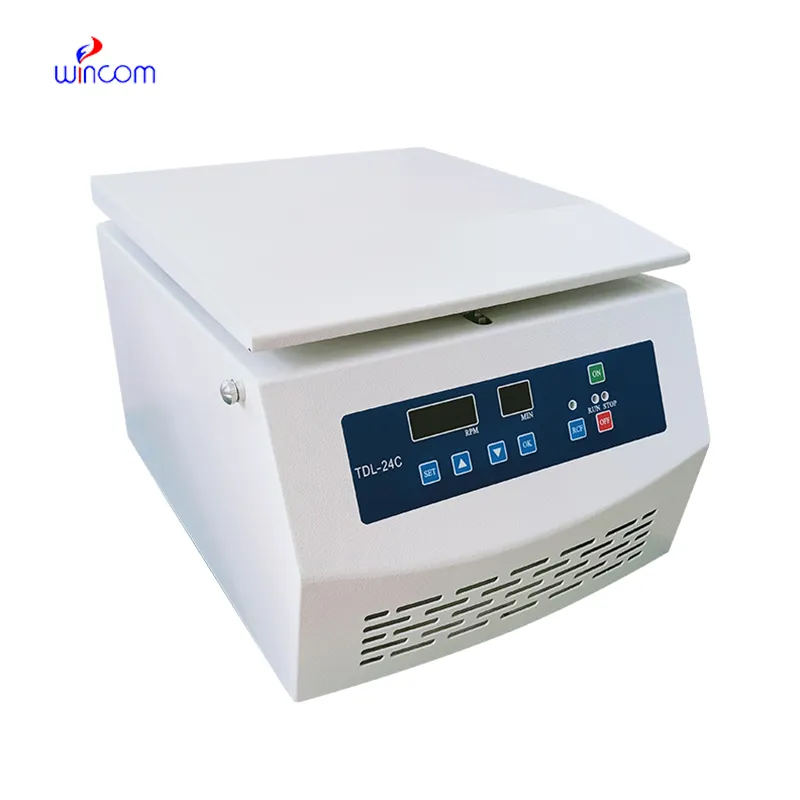
This centrifuge is as good as it gets for the laboratories that respect accuracy and productivity and at the same time do not want to take up extra space or deal with complicated operations. Explore full product details here: CTF-TL4J Centrifuge.
Centrifugation is still a vital procedure in both areas - clinical diagnostics and scientific research. A dependable centrifuge is an important part of achieving high performance and precise results in laboratories, be it in blood and body fluid analysis, molecular biology experiments, or even environmental studies. For laboratories that require versatility, efficiency in terms of space, and reliable performance, the Tabletop Low-Speed Centrifuge (CTF-TL4J) is an ideal solution that consistently produces results and at the same time enables a wide range of applications.
The right centrifuge is a major investment that results in the streamlining of workflows, the improvement of reproducibility, and the strengthening of both research and diagnostic outcomes.
A1: Low-speed centrifuges, e.g., the CTF-TL4J, are specifically made for blood separation and common laboratory jobs, whereas high-speed ones are needed for isolating smaller particles like DNA, RNA, or proteins.
A2: Regular maintenance, rotor inspection, and cleaning should be done every month or as per the manufacturer's recommendation, to ensure the centrifuge operates accurately and safely.
A3: Not really, its design is very flexible and allows for low-speed centrifugation to be utilized for medical diagnostics, molecular biology research, and teaching.
A4: Safety features include imbalance detection, a reliable lid lock, and sturdy construction which together ensure the safety of the operator and prevent the contamination of the samples.
A5: The decision depends on the sample type and volume. Fixed-angle rotors are fast for sedimentation while swing-bucket rotors give more uniform separation to soft samples.
E-mail: [email protected]
Tel: +86-731-84176622
+86-731-84136655
Address: Rm.1507,Xinsancheng Plaza. No.58, Renmin Road(E),Changsha,Hunan,China


 EN
EN
 af
af
 es
es
 ar
ar
 tr
tr
 sw
sw
 pt
pt
 th
th
 ur
ur
 bn
bn
 ne
ne
 vi
vi
 km
km
 lo
lo
 de
de
 ru
ru
 fi
fi
 nl
nl
 fa
fa
 fr
fr
 ko
ko