
Blog
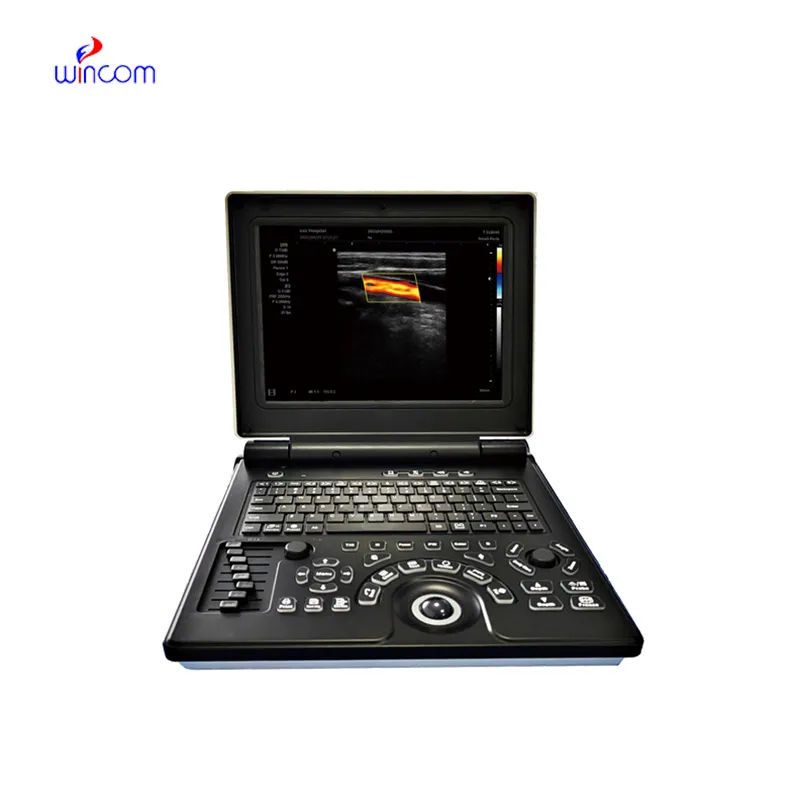
Ultrasound has progressed from conventional 2D scanning to 3D ultrasound imaging, advanced color doppler ultrasound, and increasingly compact formats that support point-of-care workflows, including the handheld ultrasound system trend. A practical way for hospitals and labs to adopt these advances today is to select a laptop-based ultrasound diagnostic system with strong Doppler, software, and probe flexibility—such as Wincom’s USS-N20C.
The move toward 3D ultrasound imaging has been driven by one core clinical need: clearer spatial understanding of structures that are difficult to interpret in 2D slices. In OB/GYN, 3D imaging allows doctors to share their observations in a more efficient way and to make a more thorough assessment of the anatomy whenever a clear view is needed. In addition, 3D capabilities in other medical fields can assist in improved documentation and review by offering volumetric data that is less hard to revisit than single-plane images.
From a purchasing perspective, 3D readiness is also an investment in longevity. A facility may begin with conventional studies today, but increasingly needs a platform that can expand into advanced visualization without replacing the entire ultrasound diagnostic system. The USS-N20C includes “3D Software can achieve 3D functionality,” making it a practical step toward 3D ultrasound imaging on a laptop platform.
While grayscale imaging answers many anatomical questions, color doppler ultrasound provides functional insight—particularly blood flow direction and distribution—supporting vascular assessment and perfusion-related interpretation. Power Doppler (often applied when sensitivity to flow is prioritized) and spectral Doppler (for waveform analysis) further extend what clinicians can conclude at the bedside.
A key operational advantage of color doppler ultrasound is speed: clinicians can obtain immediate flow information in the same session rather than relying on separate downstream testing for basic vascular screening. The USS-N20C supports CFM, PDI, and PW modes, enabling a workflow that combines structural imaging with Doppler evaluation in one ultrasound diagnostic system.
The industry’s shift toward mobility is not only about convenience; it is about removing bottlenecks. A portable ultrasound device can reduce patient transport, shorten time to imaging, and increase utilization across departments that cannot dedicate space to a cart system. This matters in emergency rooms, ICUs, operating rooms, and even lab-adjacent clinical environments where fast triage and procedural support are frequent.
Handheld ultrasound trends also reinforce this direction. One widely discussed benefit of handheld devices is that clinicians can scan patients where they are, reducing the need to move patients or search for larger systems. These point-of-care benefits are a major reason hospitals are expanding ultrasound access beyond radiology-centric models.
The USS-N20C fits into this mobility-first strategy as a laptop-based portable ultrasound device with a 12.1-inch LCD display and penetration depth information displayed as 1–400 mm. It also lists a 3200 mAh rechargeable lithium battery and Windows 7 operation system, which supports flexible deployment when stable power access is limited or when bedside workflows require portability.
A handheld ultrasound system is typically described as a small, portable unit that connects to a mobile device (or integrates with a larger system), enabling real-time imaging at the bedside and on the go. Point-of-care facilities typically make use of these devices, because they can not only facilitate quick evaluation but also speed up decision-making by medical practitioners in urgent situations, such as at the patient's bed, in ambulances, or in outdoor scenarios. This reference gives wireless designs the same credit, as they can lead to less physical tiredness with the scanning process in overcrowded hospital spaces.
For many international buyers, the best procurement pathway is staged adoption: deploy laptop platforms broadly (strong capability-per-dollar), then add handheld tools to specific high-mobility services (ED, ambulances, outreach clinics). In that staged approach, a laptop ultrasound diagnostic system with Doppler modes and multi-probe options remains essential because it serves as the daily workhorse for comprehensive examinations while handheld units fill immediate access gaps.
For overseas hospitals and clinical laboratories, purchasing decisions usually combine clinical capability, training practicality, and long-term serviceability. The USS-N20C is positioned as a multi-mode laptop color Doppler solution (B, 4B, M-mode, CFM, PDI, PW combinations) with 256 gray scale levels and two activated probe connectors, which supports a wide variety of routine and specialty exams. The availability of optional probes—convex, trans-vaginal, high-frequency linear, and micro-convex—helps facilities standardize on one ultrasound diagnostic system while supporting different departments.
For buyers comparing platforms, image processing also matters in daily workflow, not only in marketing claims. The USS-N20C lists image processing functions such as frame averaging, view angle, and edge enhancement, which supports clearer presentation for clinical interpretation and reporting.
A1: 3D ultrasound imaging adds volumetric visualization that can improve spatial understanding and documentation compared with single-plane 2D views.
A2: Color doppler ultrasound is valuable when blood flow information is needed alongside anatomy, helping clinicians assess perfusion and vascular patterns during an exam.
A3: A portable ultrasound device is commonly beneficial in emergency, ICU, bedside wards, and outreach settings where reducing patient transport and accelerating assessment improves workflow efficiency.
A4: Handheld ultrasound systems are increasingly used because they enable real-time bedside imaging and can reduce delays by allowing clinicians to assess patients quickly at the point of care.
A5: Buyers should review imaging modes (including Doppler), probe options, display and processing capabilities, battery support, and connector flexibility—features listed for USS-N20C on the product specification table.
E-mail: [email protected]
Tel: +86-731-84176622
+86-731-84136655
Address: Rm.1507,Xinsancheng Plaza. No.58, Renmin Road(E),Changsha,Hunan,China


 EN
EN
 af
af
 es
es
 ar
ar
 tr
tr
 sw
sw
 pt
pt
 th
th
 ur
ur
 bn
bn
 ne
ne
 vi
vi
 km
km
 lo
lo
 de
de
 ru
ru
 fi
fi
 nl
nl
 fa
fa
 fr
fr
 ko
ko



