
Blog
In emergency medical transport, patient safety is always the first priority. Yet patient comfort during transfer is also becoming an increasingly important part of modern ambulance and hospital equipment planning. For hospitals, clinics, ambulance service providers, and medical distributors, a stretcher is no longer viewed as just a transport tool. It is now considered a critical component in maintaining stability, reducing unnecessary discomfort, and supporting efficient emergency care.
One concept that has attracted growing attention in advanced motion-control and stabilization applications is the Stewart Platform. Known for its multi-axis support and motion management capability, this concept offers valuable inspiration for the design and improvement of ambulance stretchers. While not every stretcher requires a highly complex robotic platform, the underlying principle of better stability, controlled movement, and improved patient support is highly relevant to medical transport equipment.
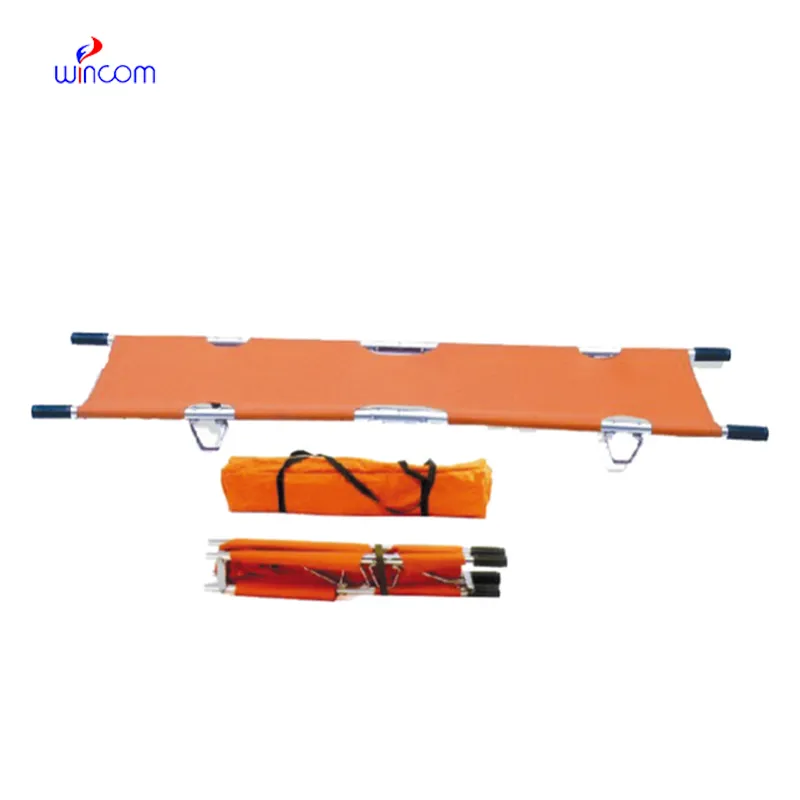
In this article, we explore how the Stewart Platform concept relates to ambulance stretcher design, why transport comfort matters in clinical settings, and how practical products such as the Folding Stretcher WN251 can support efficient and patient-friendly emergency transfer.
During emergency transportation, patients are often exposed to road vibration, sudden movement, repeated lifting, and position changes. These factors may cause additional discomfort and may even increase the risk of aggravating certain conditions.
For many healthcare providers, improving patient comfort is not simply about offering a better experience. It can contribute to:
This is especially important when transporting:
As global healthcare systems place more emphasis on quality of care, the role of a comfortable and stable ambulance stretcher becomes increasingly significant.
The Stewart Platform is traditionally associated with advanced engineering systems that require precise motion control and multi-directional stability. Its core design philosophy is based on coordinated support from multiple points, allowing a platform to remain balanced even when exposed to motion from different directions.
When translated into the field of patient transport, this concept highlights a valuable goal: minimizing unnecessary movement while improving overall support.
In the context of ambulance stretchers, this does not necessarily mean installing a sophisticated robotic mechanism in every unit. Instead, it encourages manufacturers, hospitals, and buyers to think more carefully about how stretcher design can help:
For medical equipment buyers, this is an important shift in perspective. It means stretcher selection should not focus only on basic load capacity or portability, but also on how the equipment supports better patient handling performance.
The medical industry often benefits from engineering ideas that are adapted into practical products. In stretcher design, the inspiration from advanced stabilization systems can be reflected in several important features.
A stretcher should provide dependable support throughout transport. A reliable structure helps reduce unnecessary patient shifting and gives caregivers greater confidence during movement.
For trauma transport and emergency response, structural integrity is essential for both patient safety and staff handling efficiency.
A stretcher must be easy to lift, carry, reposition, and deploy. Smooth handling contributes directly to transport safety and patient comfort.
When movement is better controlled, patients experience fewer sudden jolts during stair movement, ambulance loading, corridor transfer, or bedside relocation.
Emergency equipment should be ready for use in a wide range of environments. In many situations, portability is just as important as stability.
A folding stretcher design offers clear benefits in:
A stretcher should fit naturally into real emergency care operations. This includes compatibility with ambulance interiors, hospital transfer procedures, emergency response protocols, and routine patient movement tasks.
Products that combine ease of use, practical storage, and dependable transport performance often deliver the best long-term value.
For many healthcare institutions and medical distributors, the best stretcher is not always the most technologically complex one. Instead, the ideal solution is often the one that balances functionality, durability, portability, and cost-effectiveness.
The Folding Stretcher WN251 is a practical example of this approach.
Foldable Design for Space-Saving Storage
Its folding structure makes it suitable for environments where storage efficiency matters. This is useful for ambulances, emergency departments, rescue vehicles, and field medical operations.
Convenient Portability for Emergency Use
Portable transport equipment is essential for rapid-response scenarios. A folding stretcher can help staff respond faster while also supporting organized equipment management.
Reliable Support for Patient Transfer
A dependable stretcher structure is important in both routine and urgent transport tasks. For healthcare providers, reliability is one of the most important purchasing considerations.
Suitable for Multi-Scenario Use
The WN251 can be considered for a range of applications, such as:
While advanced stabilization systems may represent the future of patient transport, many institutions currently need products that are easy to use, easy to deploy, and ready for daily emergency demands. In that context, the WN251 serves as a realistic and efficient solution.
When hospitals, distributors, and procurement teams source ambulance stretchers internationally, they often evaluate much more than dimensions and weight capacity.
Professional buyers commonly consider:
This is particularly important for buyers working on:
A product such as the Folding Stretcher WN251 can be attractive because it addresses essential operational needs without overcomplicating the procurement process.
The future of ambulance stretcher design will likely include more intelligent motion control, more advanced shock management, and more patient-centered support systems. The Stewart Platform concept represents one direction for this evolution by highlighting the value of controlled, stable, and adaptive support.
However, healthcare buyers must often balance innovation with practical realities, including:
That is why practical stretcher solutions remain highly relevant. A well-designed folding stretcher can still make a meaningful difference in transport quality, response efficiency, and patient handling performance.
For many organizations, investing in reliable and versatile transport equipment is the most effective first step toward improving patient transfer standards.
The selection process for ambulance stretchers requires more than patient transportation assessment because it needs to create secure methods for patient movement while enhancing their comfort and enabling medical professionals to deliver effective treatment during challenging situations.
The Stewart Platform design demonstrates that stability functions as a fundamental element that needs to be maintained. The primary objective of engineering systems and practical equipment design should focus on minimizing patient movement during the transportation process.
The Folding Stretcher WN251 serves as a reliable portable transfer solution that hospitals, clinics, ambulance operators, emergency response teams, and medical distributors can use.
The process of obtaining ambulance stretchers for hospital operations, emergency medical services, distribution activities, and governmental health programs can be improved by selecting a dependable folding stretcher that will enhance patient care and transportation capabilities.
A Stewart Platform functions as a stabilization system that enables multi-axis control for advanced engineering systems. The concept of Stewart Platform applies to ambulance stretcher design because it improves support and stability, together with motion control features that help patients to experience better comfort during their transportation.
Patient comfort matters because excessive vibration, sudden movement, and poor support can increase pain, stress, and transfer risk, especially for trauma patients, elderly patients, and post-operative cases.
The folding stretcher provides hospitals and ambulances with several advantages, which include better storage options, improved portability, quick deployment capabilities, and multiple application possibilities between ambulances, hospitals, clinics, rescue missions, and temporary medical setups.
The Folding Stretcher WN251 operates as an effective transport solution that emergency responders and healthcare workers can use to move patients during medical and rescue operations across various environments.
International buyers should evaluate product reliability, portability, storage efficiency, supplier export experience, project compatibility, communication support, and bulk supply capability in addition to standard technical specifications.
E-mail: [email protected]
Tel: +86-731-84176622
+86-731-84136655
Address: Rm.1507,Xinsancheng Plaza. No.58, Renmin Road(E),Changsha,Hunan,China


 EN
EN
 af
af
 es
es
 ar
ar
 tr
tr
 sw
sw
 pt
pt
 th
th
 ur
ur
 bn
bn
 ne
ne
 vi
vi
 km
km
 lo
lo
 de
de
 ru
ru
 fi
fi
 nl
nl
 fa
fa
 fr
fr
 ko
ko