
Blog
In daily laboratory work, biosafety cabinet performance depends far more on operator behavior than most users realize. Even a high-quality Class II A2 system can fail to protect samples if airflow is disturbed by poor habits or improper setup.
As a professional laboratory and medical equipment exporter, we work with hospitals and research facilities worldwide. Based on real client feedback, this guide focuses on practical, step-by-step biosafety cabinet operation, not theory—helping laboratories reduce contamination, improve workflow efficiency, and extend equipment lifespan.
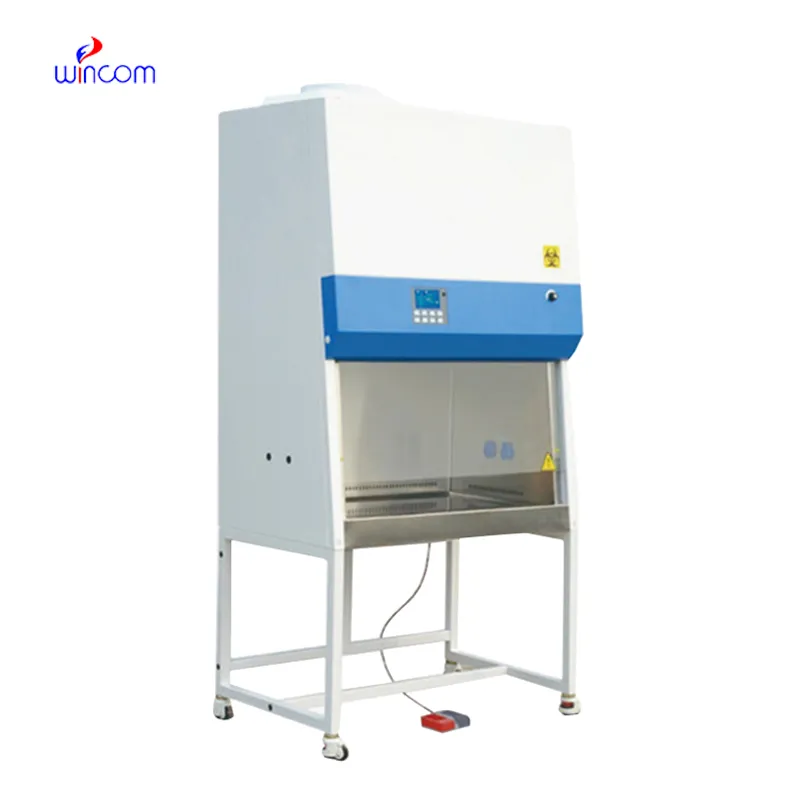
Before placing any materials inside, follow this quick startup checklist:
1. Power on the cabinet and let it run for 10–15 minutes
2. Check airflow indicator or alarm panel
3. Wipe down the work surface with approved disinfectant
4. Turn on lighting (keep UV lamp OFF during operation)
5. Adjust front sash to recommended working height
Place items in this order:
Keep the front intake grille completely clear. Never place paper towels or boxes over ventilation slots.
Tip: Bring everything you need inside before starting to avoid repeated hand entry.
Move hands slowly and deliberately. Avoid fast pulling motions.
Common mistake: repeatedly removing hands to reach for tools outside.
Fix: prepare all materials in advance.
For routine microbiology or cell culture:
If spills occur: stop work immediately, apply disinfectant, wait required contact time, then wipe clean.
Small instruments should sit at least 10 cm away from rear filters.
Never block:
Large items should be elevated on stands to maintain airflow underneath.
End-of-day cleaning significantly reduces next-day contamination risk.
Field experience shows these errors happen most often:
Each of these directly weakens containment efficiency.
Choosing cabinets with factory testing simplifies long-term maintenance.
When sourcing equipment, prioritize:
Our Class II A2 Biological Safety Cabinet BSC-110A2-X supports routine clinical diagnostics, microbiology, and pharmaceutical labs with stable airflow and HEPA filtration.
Want to Know the Product Specifications? Contact Us Now!
Working with experienced exporters provides:
These reduce installation delays and operational risks.
We support B2B buyers with:
✔ Class II A2 biosafety cabinets
✔ Technical consultation
✔ Project quotations
✔ Bulk procurement
✔ Global shipping
Contact our laboratory equipment specialists
At least once per year, or after relocation, filter replacement, or major servicing.
Biosafety cabinets are designed for biological materials. Chemical applications typically require fume hoods.
Common options include ethanol, isopropyl alcohol, and laboratory-approved disinfectants.
Allow 10–15 minutes to stabilize airflow.
Class II A2 cabinets provide personnel, product, and environmental protection with HEPA-filtered exhaust and recirculation.
E-mail: [email protected]
Tel: +86-731-84176622
+86-731-84136655
Address: Rm.1507,Xinsancheng Plaza. No.58, Renmin Road(E),Changsha,Hunan,China


 EN
EN
 af
af
 es
es
 ar
ar
 tr
tr
 sw
sw
 pt
pt
 th
th
 ur
ur
 bn
bn
 ne
ne
 vi
vi
 km
km
 lo
lo
 de
de
 ru
ru
 fi
fi
 nl
nl
 fa
fa
 fr
fr
 ko
ko



